La traducción al español correspondiente no está disponible. Seleccione
‘Continuar’ para ir a la página de inicio en español.
Pipeline Safety Enhancement Plan (PSEP)
PSEP helps to ensure the safety and integrity of our natural gas system.
In 2011, the California Public Utilities Commission (CPUC) ordered all natural gas transmission operators in the State of California to develop an Implementation Plan to achieve the goal of orderly and cost-effectively testing or replacing all natural gas transmission pipelines in their system that have not been pressure-tested. As a result, the Pipeline Safety Enhancement Plan (PSEP) was established to promote the continued safety and integrity of our natural gas transmission pipelines.
PSEP identifies pipeline sections throughout our system without a record of a pressure test and slates them to be pressure-tested or replaced. We notify customers and the public when pressure testing or replacement activity is coming to their neighborhood.
Hydrostatic Pressure Testing
One of the common methods of assessing pipeline integrity is the hydrostatic pressure test. Hydrostatic pressure testing is a process that uses water to exert pressure on a pipeline at levels much greater than its usual operating pressure.
Sometimes natural gas pipelines need to be replaced to meet expanding customer and/or natural gas system needs as well as to accommodate infrastructure improvement projects of cities, counties and state agencies.
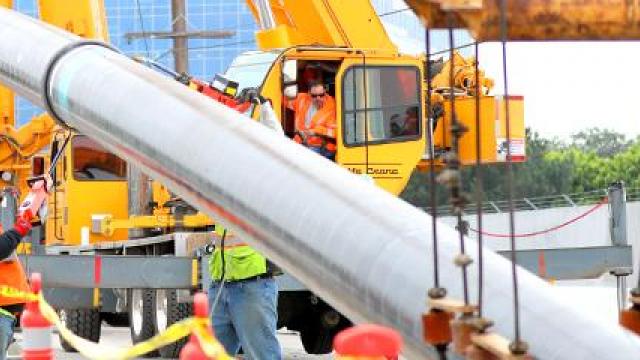
A pipeline replacement project can be a significant construction operation. Typically, the new pipeline segment is installed adjacent to the existing pipeline, which allows the construction work to proceed without stopping the flow of natural gas through the original pipeline.
Pipeline valves are one of the key safety components involved in the testing, maintenance and everyday operational activities of our natural gas pipeline. Valves are mechanical devices that control the flow of natural gas through our pipelines.